Monday, January 05, 2009


Wednesday, December 31, 2008
Torture and the ticking bomb
A fascinating moral, ethical and legal question.

Sent to you by nigel via Google Reader:
via Citizen Katzenjammer by dangardner on 12/31/08
Five years ago, I travelled to Egypt, Turkey, and Uzbekistan to study torture. (Yes, it was depressing. Thanks for asking.) Out of that came a series of articles examining the issues from a number of angles.
One of these deals with the arguments in favour of torture in exceptional circumstances. "What about the ticking bomb scenario?" a reader asks in a comment to a post below. That's here. And much else.
(Apologies for the length of the post. The piece isn't available online so I can't link to it.)
A choice of evils.
The Ottawa Citizen
Friday, February 6, 2004
Dan Gardner
Series: The Face of Torture.
"Suppose a terrorist has hidden an atomic bomb on Manhattan Island which will detonate at noon on July 4," wrote philosopher Michael Levin. "Suppose further that he is caught at 10 a.m. of the fateful day, but -- preferring death to failure -- won't disclose where the bomb is. What do we do? If we follow due process -- wait for his lawyer, arraign him -- millions of people will die. If the only way to save those lives is to subject the terrorist to the most excruciating possible pain, what grounds can there be for not doing it? I suggest there are none."
Mr. Levin wrote this provocative passage in 1982. At the time, and for almost two decades after, the debate about whether torture may sometimes be justified was a popular exercise in moral philosophy classes but it was seldom heard anywhere else. Most people didn't imagine extreme situations such as Mr. Levin's ticking-bomb scenario. Torture was simply wrong. And that consensus was enshrined in the 1984 United Nations Convention Against Torture, which forbids the deliberate infliction of pain or suffering under any and all circumstances: Not even a ticking atomic bomb can legally justify torture.
Then came Sept. 11, 2001. The terrorist attacks that day revealed to anyone with a television the depth of Islamist fanaticism and the terrible carnage that can be inflicted by people whose greatest desire is to kill and die. Suddenly, whether torture is always wrong was no academic exercise.
The first hint of the coming debate appeared in the media shortly after Sept. 11, when anonymous FBI agents were quoted saying they may need the authority to torture to prevent another catastrophe. Not long after, Alan Dershowitz, the renowned civil libertarian and law professor at Harvard University, received widespread attention for his suggestion that the law allow for "torture warrants" to be made available in extreme situations. Many others joined in to suggest that while torture may be awful, sometimes it is just. Even Richard Posner, an esteemed judge of the U.S. federal court of appeals, wrote in The New Republic magazine, that "if the stakes are high enough, torture is permissible. No one who denies that that is the case should be in a position of responsibility."
The revisionist talk even reached the various human rights bodies of the United Nations, says Malcolm Evans, a professor of international law at the University of Bristol in England. "This is deeply worrying, coming from these levels."
It seemed torture was creeping toward some degree of legitimacy in the Western countries which had firmly rejected and condemned it. Human rights activists were appalled and fought back. Arguments flared up repeatedly on television, in newspapers, book reviews and intellectual magazines.
Still, neither international nor domestic law has changed. Torture continues to be forbidden under any and all circumstances.
Should it be? Michael Levin's imagined scenario makes the issue seem simple and clear: If a terrorist bomb is ticking and torture is the only way to save a city, it's hard not to believe we must torture. Others, thinking of the Sept. 11 attacks, would go further: If we want to stop the terrorists from obtaining that bomb in the first place -- or preparing any other deadly plots -- counter-terrorism officials should be free to torture terrorists whenever necessary.
But quick conclusions would not be wise. More than two years after Sept. 11, the debate about torture has played out repeatedly, argument has been met with counter-argument, and the only thing that has become absolutely certain is that the debate is not simple and clear. Like torture itself, it is complex and troubling, no matter which side of the issue one takes.
- - -
Two arguments have been heard that would short-circuit the whole discussion. The first of these is the idea -- common to some schools of philosophy -- that an evil act remains evil even if it has very good consequences. Torture is always wrong and must always be forbidden, this reasoning goes, even if a particular act of torture were to save many lives. It's a view summed up in the Roman maxim, "let justice endure though the world should perish," and while that may be satisfying to some philosophers, it's not to the great majority of us who do consider the consequences of an act in deciding whether that act is right. So few people would stop the discussion here.
Another attempted short-circuit is the idea that so-called "stress-and-duress" interrogation techniques -- sleep and food deprivation, constant noise, forcing prisoners into awkward positions, etc. -- could be used. This shouldn't trouble us morally, some say, because these techniques don't cause enough suffering to be "real torture," as one writer put it. This argument is simply wrong -- stress-and-duress does inflict terrible suffering and it is torture. Also, stress-and-duress methods take time, so they would be useless in the classic ticking-bomb scenario. The debate cannot be dodged this way.
Alex Neve, secretary-general of Amnesty International Canada, suggests the starting point of the debate must be a very basic question: Does torture work? If the answer is no, after all, there's no reason to even consider using it. And Mr. Neve is certain the answer is no. "The notion that you can beat the truth out of someone in that kind of highly charged situation is false and misguided. When you start beating and torturing people they'll say anything to get the pain to stop."
This objection to torture dates back to ancient times and it was a key argument in the 18th century, when the modern anti-torture movement was launched. There is literally centuries of evidence to support it, the very latest example being Maher Arar, who insists that his confession during his Syrian imprisonment was a lie he told simply to stop his captors from beating him.
Similar stories are told by torture victims the world over. In an Egyptian case that recently came to light, torture caused a father to "confess" to the murder of his daughter, who later turned up alive and well. During an interrogation in Apartheid South Africa, a mixup in code names resulted in a tortured political prisoner admitting that he had murdered himself.
The tendency of torture to produce false information is so well documented no one seriously disputes it, but that doesn't prove that torture never produces valid information. In a ruling that forbade the use of stress-and-duress techniques, for example, the Israeli Supreme Court accepted that some terrorist attacks had been foiled by the use of the techniques in interrogations.
Alan Dershowitz says another success story is a case from the mid-1990s in which Filipino soldiers "arrested a Muslim terrorist who had on him plans, and they tortured him for 40-something days and they got him to admit there was a plan to kill the Pope and also a plan to blow up various western airliners going across the Pacific. They didn't believe him, as they should not," says Mr. Dershowitz, who agrees that torture often generates false information. Instead, the interrogators demanded the suspect provide proof of his claims or they would continue with the torture. "He led them to a tailor who was making the robe that was going to be worn by the terrorist that had pockets in it for the explosives and showed them the equipment that was going to be used to blow up the plane. When that happens, you believe it."
Torture can be effective, Mr. Dershowitz says, provided interrogators always insist on corroboration. "It has to be self-proving. He has to lead you to hard evidence."
Defenders of the absolute ban on torture also argue the debate is too narrowly focused, that it's not enough to say that the benefits of torture in something like a ticking-bomb scenario -- the lives saved -- outweigh the sheer inhumanity of committing torture. Any use of torture also carries the risk of hidden costs, and these have to be weighed against any alleged benefit.
"Torturing radical Islamists makes them more violent," Dr. Suzan Fayed, an Egyptian psychiatrist and human rights activist told the British newspaper The Guardian. The most infamous example is that of Dr. Ayman al-Zawahiri, an Egyptian Islamist arrested and tortured following the murder of Egyptian president Anwar Sadat in 1981. Many who knew Dr. al-Zawahiri are convinced the torture radicalized his views: After his release, Dr. al-Zawahiri left for Afghanistan, where he met Osama bin Laden and ultimately became the No. 2 man in al-Qaeda.
Torture can also radicalize whole peoples, as victims become "living martyrs" for their cause and their families, clans and tribes are driven into opposition. Torture can convince moderates "that the regime deserves destroying because it does not respect the dignity of people," Hafiz Abu Sa'eda, the head of the Egyptian Organization for Human Rights, told The Guardian. Many observers feel this is exactly what happened in Algeria in the 1950s and 1960s: The French military successfully used torture to crack terrorist rings, but the brutality drove the previously passive Algerian population into mass rebellion.
Torture was similarly counter-productive in Turkey and Northern Ireland. "Whenever people are tortured," says Alex Neve, "that contributes to the ongoing cycles of violence and repression and grievance and revenge which fuel not only human rights violations, but lead to civil war and provide the fertile ground in which extremist groups take hold. It ultimately leads to men, women and children around the world being more insecure, not more secure."
Mr. Neve argues that for a Western government to even suggest that it may use torture would inflict another major cost. "It undermines the ability of the Canadian or American government to make clear and forceful representations to any other governments that may be engaged in torture. Representations that torture must come to an end are dramatically undermined if a government has taken steps to allow torture to take place." It wouldn't matter if we were to say our use of torture would be only in extreme cases of national security, Mr. Neve insists. "Those are precisely the kinds of excuses and justifications that repressive governments around the world use to justify their misdeeds and actions. (For Western governments) to use that same language and those same excuses will simply fuel and encourage that practice elsewhere."
Many fear this is already happening as a result of the published reports indicating the United States is using stress-and-duress techniques in its terrorism interrogations. An Amnesty International report called American behaviour "the threat of a bad example" and human rights activists interviewed by the Citizen in Egypt and Turkey unanimously agreed that the allegations about stress-and-duress has made it harder for them to fight torture in their countries.
Still, it can be argued, an exception to the ban on torture could be narrowly crafted to avoid at least some of these "hidden" costs. And in dire emergencies, we still may decide that even the hidden costs of torture do not outweigh the terrible loss of life that will happen if we do not torture. In that case, we would still demand an exception to the ban, although it would be a very narrow exception to be used in only the most extreme emergencies, such as an atomic bomb ticking in Manhattan.
Malcolm Evans says it's tempting to think such a narrow exception is possible, "but even in that ticking-bomb situation, once you accept the legitimacy of (torture), it spills out into society." This "spilling out" could happen several ways.
First, there's the problem of certainty. The ticking-bomb scenario assumes the police know with absolute certainty that there is a bomb and they have the man who placed it. But, says William Aceves, a law professor at California Western School of Law in San Diego, "the problem is you probably will never find a case where you know for a fact that that bomb is there or that this person has that information."
What's much more likely is a situation in which the police are fairly certain, although not 100-per-cent certain. Should they torture under those circumstances? "It becomes very easy to say, well, let's require an 80-per-cent chance that we have the right guy. That sounds reasonable. But what if it's 50 per cent? What if it's 40 per cent? What if it's five per cent? I think the reality of law enforcement is we are never sure of anything, and I think that if you justify torture at that one extreme, it becomes easy to lower the standard for when we are prepared to torture someone."
Another standard that risks dropping is the potential harm required to justify torture. In Michael Levin's scenario, millions could be killed. But in the Sept. 11, 2001, attacks, the worst terrorist atrocities in history, around 3,000 died. Would torture have been justified in order to save those lives? And if 3,000, what about 300? Thirty? Three? If torture is deemed legitimate to save many lives, we may ultimately say it is legitimate to save even one life.
Alan Dershowitz cites a recent, troubling case in Germany in which police arrested a man believed to have kidnapped the son of an industrialist. "The guy admitted he was the kidnapper. There was no doubt about it. He just gloated and wouldn't tell them where the boy was. And they got (illegal) authorization to torture him, and as soon as they showed him the authorization, he told them where the boy was. Unfortunately, the boy was dead. But it started a great debate in Germany as to whether or not torture is justified in order to save one innocent life."
Alex Neve worries about another way that a narrow exception could spill out into something wider. "If it's OK to torture this person because you're pretty sure they know where the bomb is, does that mean that you should be able to torture the person you're pretty sure knows where to find the person you're pretty sure knows where the bomb is?
"Does it mean you're allowed to torture someone from their family, because certainly they'll have some information? Does it mean you're allowed to torture all members of their political organization? Or their religious faith? Some of these possibilities may start to sound extreme, but that's exactly the pattern of human rights abuses we see around the world."
Michael Levin understood that making an exception for something as extreme as a ticking bomb sets up a logic that pushes for more and more exceptions. In fact, he argued in favour of following that logic to its conclusion. "Once you concede that torture is justified in extreme cases, you have admitted that the decision to use torture is a matter of balancing innocent lives against the means needed to save them." Mr. Levin applied that calculation to less-extreme scenarios. By the end of his article, he concluded that torture should be used against the "obviously guilty" in any situation where it could save an innocent life -- even routine kidnappings.
Alan Dershowitz does not support such a radical position, despite many media reports to the contrary. "I would say 90 per cent of the articles that have been written about my position have totally and completely distorted my view and made me out to be a strong supporter of torture."
Mr. Dershowitz says he's not trying to resolve whether torture is morally right in some circumstances. "My position is that torture will, in fact, occur," particularly in a major crisis like a ticking-bomb scenario. "And for me, the issue is, if it's going to happen, is it worse to have it happen the way we're doing it in the United States now, surreptitiously, with deniability, in secret locations, without any approval? Or is it worse to authorize it by judicial or executive warrant, so there's accountability?"
Mr. Dershowitz's "torture warrants" would only be available in true ticking-bomb crises where there was "absolute certainty, the kind of certainty that is required to execute somebody." Having clear, fixed criteria for obtaining a warrant would keep it under tight control and ensure torture wouldn't spread, Mr. Dershowitz feels.
During the Middle Ages, both England and France permitted torture, Mr. Dershowitz says, "but England required a torture warrant and there was much less (torture) and it was much more subject to control. And when England decided to abolish it, it was much easier to abolish, because you just had to publish a rule saying no more warrants would be given."
Richard Posner thinks Mr. Dershowitz's argument is too narrowly logical and ignores how people really behave. "If rules are promulgated permitting torture in defined circumstances," Judge Posner wrote in The New Republic, "some officials are bound to want to explore the outer bounds of the rules." Even bright lines can be stretched.
Worse, wrote Judge Posner, torture warrants would legitimize torture, and one way or another, that will inevitably lead to more of it. "Having been regularized, the practice will become regular."
Israeli experience suggests Judge Posner is right. In 1987, Israel authorized its General Security Service (the Shin Bet) to use what are now known as stress-and-duress techniques -- including sleep-deprivation, forced awkward positions, and "a moderate measure of physical force" -- during interrogations. Guidelines detailed methods and carefully defined when they could be used, and a high-level committee monitored compliance. The ticking-bomb scenario was constantly cited in support of this change, but despite all the safeguards, the use of these techniques rapidly proliferated so that an emergency measure became something close to routine practice.
In 1999, the Israeli supreme court ruled that all the stress-and-duress techniques were illegal and their use declined.
- - -
It seems that defenders of the absolute ban on torture have been successful in showing that any exception to the ban would carry serious, even terrible, costs. But still they have to face the brutal scenario that began this essay. What if there is an atomic bomb ticking in Manhattan and the police know, with great certainty, they have the perpetrator under arrest? However bad the costs of torturing may be, surely, in these rare, extreme circumstances, they are outweighed by the costs of not torturing. So what should the police do?
Malcolm Evans sighs when he's asked about this ultimate choice between evils. "It would be a very brave person who could actually say with complete moral certainty that if they were put in that position that they would not be prepared to (torture)," he says. "I think one simply does what one does and then throw the case to the judgement of society. What else can one do?"
Under these circumstances, it's not likely a police officer would be punished for saving countless lives, writes Henry Shue, an ethicist at Cornell University who supports the absolute ban on torture. "If the situation approximates those in the imaginary examples in which torture seems possible to justify," he writes, "a judge can surely be expected to suspend the sentence."
But this expectation must never be turned into an official ticking-bomb exception, argues Slavo Zizek, a Slovenian social theorist. Only by keeping the total ban "do we retain the sense of guilt, the awareness of the inadmissibility of what we have done."
In its ruling forbidding stress-and-duress techniques, Israel's supreme court acknowledged the challenge of the ticking-bomb scenario, but suggested an officer charged with torture under those circumstance could claim the defence of necessity at trial.
Canadian law, too, has a defence of necessity under which a person is acquitted for doing something that's normally illegal if it was necessary to save lives -- such as a mother who robs a store because she was ordered to by a kidnapper who holds her daughter. Mercy can also be granted by the federal justice minister. Whether either mechanism would clash with the absolute ban on torture under international law is unclear.
But as Sanford Levinson, a law professor at the University of Texas, points out, this solution basically admits there are forms of "morally permissible torture." And if a trial actually resulted in an acquittal, a suspended sentence, or a grant of mercy, it would give "formal imprimatur" to actions that are supposedly forbidden. In other words, even this position risks legitimizing torture.
"There are no happy solutions," says Alan Dershowitz, which is probably the only thing that everyone involved in this debate agrees on.
"This is a choice of evils. And a choice of evils requires articulation. Bring it to the surface. That's what's important about this debate."
Things you can do from here:
- Subscribe to Citizen Katzenjammer using Google Reader
- Get started using Google Reader to easily keep up with all your favorite sites
Monday, December 29, 2008
Holiday Reading
Books I've read over the holidays:
- Numerati, by Stephen Baker. An easy introduction into the implications of data warehousing and BI on the varying spheres of life - from consumer to citizen.
- Abstinence Teacher by Tom Perrotta. While I liked his efforts to explain and empathize with why people join evangelical churches, I didn't find the characters that believable. The story and plot, though, moved along fast.
- Survive! by Les Stroud. Yep, Survivorman in book form. It's what it is. As they say, if that's the sort of thing you like, then it's the sort of thing you'd like.
- All the Colours of Darkness, Peter Robinson. A Chief Inspector Banks mystery where Othello meets up with MI6 - or is it MI5? Either way, it delivers a reasonably satisfying mystery read, but not as good as his Dry Season.
- Killing Circle, by Andrew Pyper. A taut suspense/thriller/horror set in and near Toronto, with familiar landmarks - but is really quite creepy.
- Why Mexicans Don't Drink Molson, by Andrea Mandel-Campbell. While I was already aware of most of the anecdotes in the book, reading them over and over at one setting is a depressing litany of Canadian business failures, both abroad and at home. It's interesting, though, trying to parse the varying contradictions in the stance of pro-business advocates, from support (read: subsidize) us, to encourage mergers/no don't....
- The Rest is Noise, by Alex Ross. A history of 20th century classical music. Reading this is tough - not having the musical background meant I kept scurrying onto the Internet to find correct intro to the pieces he describes. While I haven't finished, it's satisfying trying to understand the linkages between, say, Strauss & Mahler. How one symphony is a rhetorical answer to the other Viennese composer's pieces.
- Richard Hofstadter, An Intellectual Biography by David S Brown. One of the great public intellectuals who stood between the American progressive movement and mid-century American liberalism, Hofstadter was also the author of an essay that inspired a course at Queen's - The Paranoid Style in American Politics. It's difficult to think of a comparably, more recent single essay doing that.
- The Turnaround, by George Pelecanos. Bad things continue to happen then and now in Washington DC, involving class, race and power. I think I liked the Night Gardener better.
Tuesday, December 23, 2008


Monday, December 22, 2008
Re: What are you doing today?
Looks like a smile?
Get back to work!!
I'm going back to sleep.
Ironically... it looks like a smile too!!On Mon, Dec 22, 2008 at 11:34 AM, nigel <nigel.wallis@gmail.com> wrote:
So painfully true.
Sent to you by nigel via Google Reader:
Things you can do from here:
- Subscribe to Indexed using Google Reader
- Get started using Google Reader to easily keep up with all your favorite sites
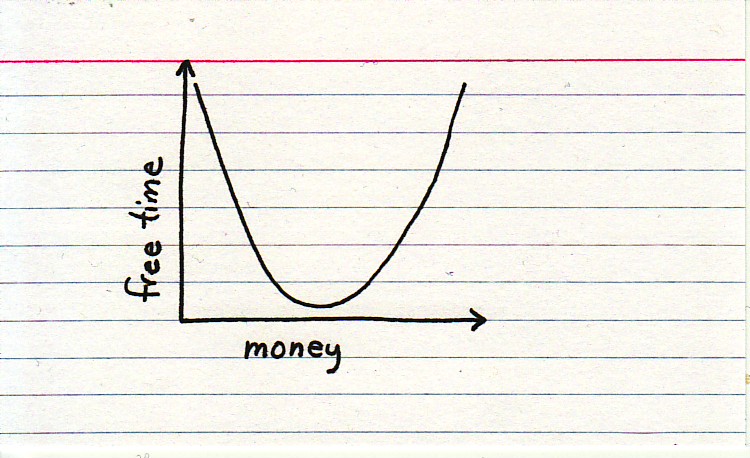
Re: What are you doing today?
Ironically... it looks like a smile too!!
On Mon, Dec 22, 2008 at 11:34 AM, nigel <nigel.wallis@gmail.com> wrote:
So painfully true.
Sent to you by nigel via Google Reader:
Things you can do from here:
- Subscribe to Indexed using Google Reader
- Get started using Google Reader to easily keep up with all your favorite sites
What are you doing today?
So painfully true.
Sent to you by nigel via Google Reader:
Things you can do from here:
- Subscribe to Indexed using Google Reader
- Get started using Google Reader to easily keep up with all your favorite sites
Sunday, December 21, 2008
Historicist: Worshipping in the Open Air
Sent to you by nigel via Google Reader:
via Torontoist by Kevin Plummer on 12/20/08
Every Saturday morning Historicist looks back at the events, places, and characters—good and bad—that have shaped Toronto into the city we know today.
High Park Toboggan Runs, ca. 1906-1910. City of Toronto Archives, Fonds 1244, Item 438."

After a month and a half of acrimonious debate, on February 19, 1912, City Council passed a by-law outlawing tobogganing in public parks on Sundays. Many councillors took their cue from the Lord's Day Alliance and similar organizations. They felt that the Sabbath was such a grave moral issue that public engagement in business, sporting activities, and other entertainments needed to be curtailed not only to encourage church-going but also to ensure workers had a day's rest. The city's labour movement, however, took exception to religious groups speaking for them and rallied to vigorously defend Sunday tobogganing. Despite a massive public outcry, however, the Sunday sledding ban was passed by a large majority at City Council with only Mayor George Reginald Geary and six aldermen dissenting. The controversy surrounding the issue reflected how, at the turn of the twentieth century, Toronto's social and religious establishment felt under siege in the rapidly growing city by the forces of industrialization and immigration and by the growing strength of the labour movement.
High Park Toboggan Runs, 1914. City of Toronto Archives, Fonds 1244, Item 441A."

In the late Victorian era, an immigration-fuelled population boom dumped most newcomers and industrial workers into the city's crowded, squalid slums. Reformers raised concerns that a lack of recreational opportunities for residents of these districts might breed disorder, vice, and delinquency. From the late 1890s, city-run recreational programs and leisure facilities became important public issues.
With the two hundred yard drop to the valley floor in Riverdale Park and the massive hill in the undeveloped wilderness of High Park, tobogganing had been a favoured winter pastime for Torontonians since private operators had begun running toboggan slides at both locations in the 1880s. By the turn of the century, overcrowding had raised concerns about safety. Even after lights were added when the city assumed responsibility for the toboggan slides in the winter of 1906, some reformers still questioned whether the city was doing enough. When, in 1907, thousands of resourceful kids began to use the slopes just west of Queen's Park for sledding, they were chased away by University of Toronto officials. This prompted newspaperman and social reformer J.J. Kelso to call for an expansion of city-run free sliding facilities for children. In response to this and The Star's 1909 criticisms about safety at the park slides, the municipal government upgraded the slides and assigned police to supervise. As historian Gene Homel writes in his October 1981 article in the Urban History Review, by 1912 "Toronto now had a fancy new system of public tobogganing, and its residents flocked to the slides seven days a week."
The Beginning of the Toboggan Run, High Park, ca. 1906-1910. City of Toronto Archives, Fonds 1244, Item 439."

In January 1912, the Ministerial Association took exception to the Sunday crowds on the snowy slopes and issued a proclamation condemning city officials for encouraging the desecration of the Sabbath by keeping the toboggan slides open. Initially, Mayor Geary and the Board of Control paid little notice, and the public continued to flock to the hills of Riverdale Park and High Park each week. But, as other religious and moral-reform organizations rushed to defend Toronto's Christian morality, City Council couldn't ignore the barrage of petitions they received demanding that the slides be closed on the Lord's Day.
Sabbatarianism was a well-established political force in Toronto. Based on the notion that, in a Christian society, all people needed one day of rest for their moral and spiritual well-being, Sabbatarianism had gained strength as a movement in the 1880s with the establishment of national church organizations and the Lord's Day Alliance. On a national level, they'd succeeded in petitioning the federal government to pass the Lord's Day Act in 1906, which prevented all non-essential and non-charitable Sunday activity. Locally, the Sabbatarians had led a long, protracted fight in the 1890s against allowing streetcars to run on Sundays, as recounted in Christopher Armstrong and H.V. Nelles's The Revenge of the Methodist Bicycle Company (Peter Martin Associates Limited, 1977). With the support of the working class, the Sabbatarians won civic plebiscites on the streetcar issue in 1892 and 1893. But eventually labour leaders defected because, although a few people might now have to work, Sunday service presented the best opportunity for workingmen and their families to escape their unhygienic and over-crowded neighbourhoods for healthy recreation in the parks and suburbs. In a close referendum vote in 1897, streetcars were finally allowed to run on Sundays.

The case in favour of Sunday tobogganing was made before the Board of Control on the same day by prominent labour leader J.D. O'Donoghue. Sunday, the labour argument went, was the only day that workingmen could actually make use of toboggan slides in city parks. Closures would therefore be unfair and harmful for the very group who most required healthy recreational activity. More importantly, union leaders were incisively critical of the hypocrisy of the Sabbatarian position—an indication of the deepening schism between twentieth century labour and moral reformers—whereby the religious folk invoked working men's interests for their cause but thought nothing of engaging their own chauffeurs in Sunday work. The critiques of labour advocates towards Sabbatarians could therefore take a pretty biting tone. Phillips Thompson, a radical, called for workers to unite against "a few noisy fanatics...of this priest and parson-ridden city." A supportive newspaper opined that Sabbatarians had "just enough religion to miss all the fun in this world and get a lot of painful surprises in the next." Union leader L.H. Gibbons was more articulate. He argued that recreation and religion need not be in conflict because people "can worship in the open air or anywhere, as well as inside the four walls of a church."
High Park Toboggan Runs, ca. 1908-1912. City of Toronto Archives, Fonds 1244, Item 440."

Newspapers were filled with letters supporting Sunday sledding. The Star reiterated that the safety of sledders was cause enough to keep the slides open because the by-law might drive winter enthusiasts from the specially designed slopes to more dangerous ravines and hills. Even business interests ardently opposed a prohibition on tobogganing—albeit because they didn't want to deepen class cleavages by antagonizing those who worked in their factories and workshops. Business leaders, according to a petition published in the papers, even recognized that the proposed prohibition was merely discriminatory "class legislation." While those against the Sabbatarian proposal were probably more numerous and agitated than during the streetcar debates, Homel argues, they weren't as united and lacked the organization and institutional weight of the church groups. Nor was there a single corporate entity, like the Street Railway Company, backing the opposition as there had been in 1897.
And so where the debate mattered most—in the council chamber—Sabbatarian-influenced councillors were not swayed by the popular outcry. One of the few dissenters, Alderman Samuel McBride twice failed in his attempt to have the city hold a plebiscite on the issue. On February 19, the new by-law was passed. It stated: "No person shall on the Sabbath in any public park, square, garden or place for exhibition in the City, slide upon or use any of the public slides constructed or maintained by the Corporation." Ironically, ever-resourceful Torontonians simply shifted their winter recreational activities to comply with the law. Rather than tobogganing, each Sunday thousands simply availed themselves of Grenadier Pond in High Park and the city's other skating rinks—which had grown in number from one or two in 1890 to over thirty in 1912.
Observance of the Sabbath remained so strong throughout the 1930s and 1940s—although restrictions were slowly diluted to allow the opening of the museum and art gallery—that the quirks of Toronto's notorious blue laws required repeated explanation in guidebooks. Organized games, team sports, and tobogganing in city parks continued to be banned on Sunday. Even after the park slides were phased out of existence in the 1940s and 1950s, the edict against tobogganing remained on the books until December 1961.
Image of Group on Toboggan, ca. 1911. City of Toronto Archives, Fonds 1244, Item 478A."


Things you can do from here:
- Subscribe to Torontoist using Google Reader
- Get started using Google Reader to easily keep up with all your favorite sites
Friday, December 19, 2008
Standing on the Shoulders of Giants
Sent to you by nigel via Google Reader:
via The Torch by Babbling Brooks on 12/19/08
I was corresponding with one of my grandfathers by e-mail earlier today. He's a WWII veteran, with experiences in a Lancaster bomber that he cannot speak of even to this day. He was commenting on the family picture we sent to my grandmother and him, saying he never expected to make it to over eighty years old, and certainly didn't expect to meet his great-grandchildren, the eighth generation of Canadians in our line.I reminded him that we're pretty proud of where we come from. When I was at Air Force Indoctrination school at CFB Comox more than fifteen years ago, our class was shown a poem. Much of it remained with me over the years, but I wanted to make sure I got it right before I sent it to him.
Luckily, I found it online. I suspect Miles Selby picked the poem up the same place I did:
Every man has leaned upon the past.
Every liberty we enjoy has been bought at incredible cost.
There is not a privilege nor an opportunity
that is not the product of other men's labors.
We drink every day from wells we have not dug;
we live by liberties we have not won;
we are protected by institutions we have not set up.
No man lives by himself alone. All the past is invested in him.
We stand on the shoulders of giants. If you're lucky enough, as I am, to still have some of them to visit with, make sure you do it this holiday season.
Things you can do from here:
- Subscribe to The Torch using Google Reader
- Get started using Google Reader to easily keep up with all your favorite sites
Thursday, December 18, 2008
More from the Big Picture
2008 in photographs (part 2 of 3) - The Big Picture
I'll bet Dean Kamen never thought of using Segways like that...
I'll bet Dean Kamen never thought of using Segways like that...
Wednesday, December 17, 2008
Thursday, December 11, 2008
Immigration to the US
Sent to you by nwallis via Google Reader:
via The Big Picture by Barry Ritholtz on 12/11/08
Fascinating animation:
Immigration to the US, 1820-2007 v2 from Ian S on Vimeo.


Things you can do from here:
- Subscribe to The Big Picture using Google Reader
- Get started using Google Reader to easily keep up with all your favorite sites
Friday, December 05, 2008
Subscribe to:
Posts (Atom)
